Most forklift safety systems on the market today were designed in the 1990s. They measure G-force, log timestamps, and generate reports. When something goes wrong, you get a number on a spreadsheet.
The problem: by the time you see that number, the damage is already done. The impact already happened. The injury already occurred. The product is already destroyed.
This is the fundamental limitation of traditional safety technology. It tells you what happened. It cannot tell you why. And it definitely cannot prevent the next incident.
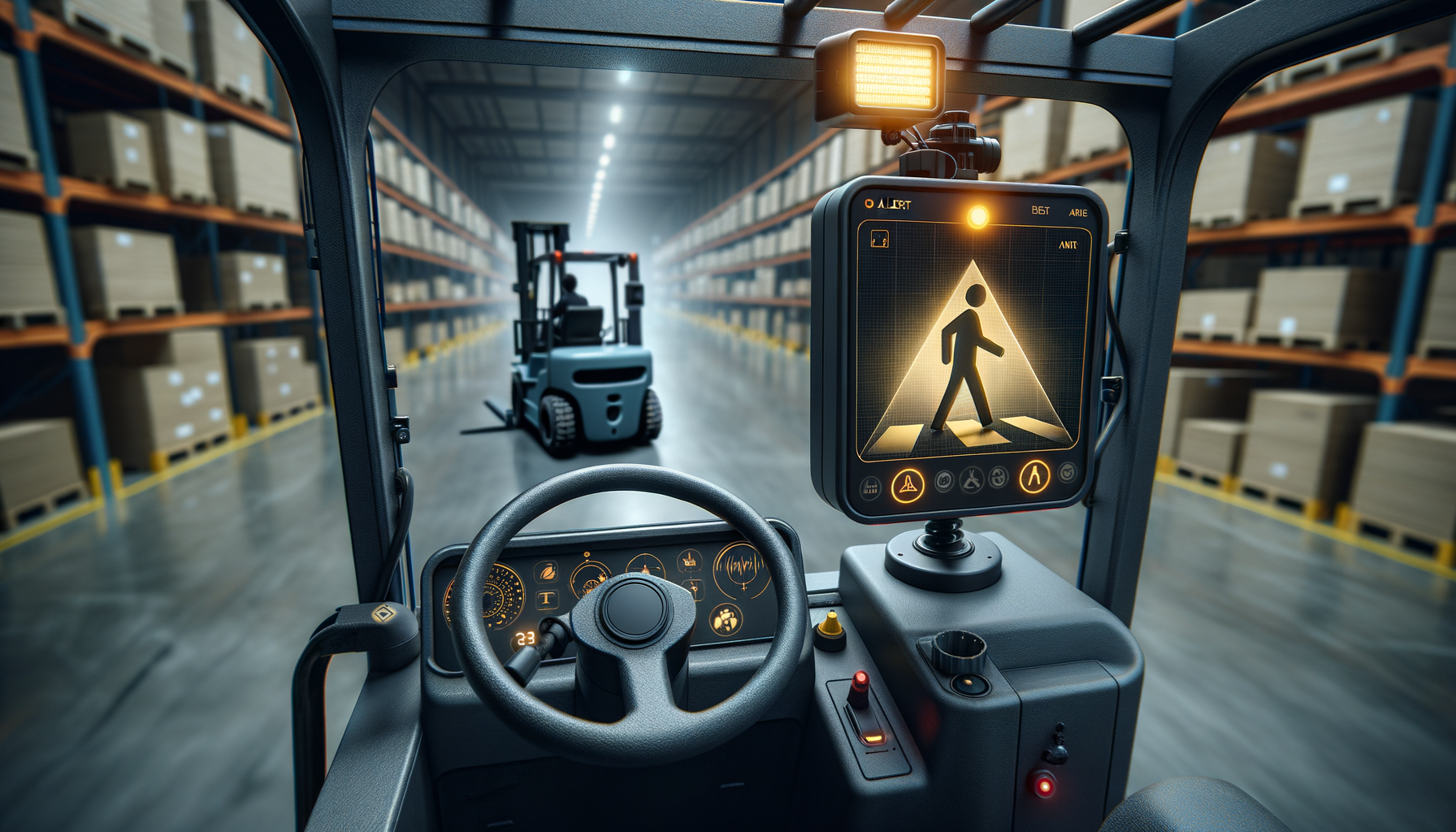
That is changing. Vision AI has turned cameras into the most powerful sensors in a warehouse. Not cameras that record footage for someone to review later. Cameras that understand what they see in real time, identify risk before it becomes an incident, and surface the specific moments that need human attention.
Here is how the technology has evolved, what it means for warehouse safety, and what to look for if you are evaluating a modern forklift safety system.
What Traditional Forklift Safety Systems Actually Do
Traditional systems fall into a few categories.
Impact sensors and telematics measure G-force. When a forklift hits something hard enough, the sensor triggers. You get an alert. Maybe a timestamp. Maybe GPS coordinates if you have that level of system.
The limitation: G-force tells you an impact happened. It does not tell you why. Was the operator distracted? Was there debris on the floor? Did another forklift cut them off? Did they not see a pedestrian? You have a data point with no context.
Speed governors and proximity sensors limit how fast a forklift can travel or beep when something gets close. These are safety features, not safety systems. They do not generate data you can coach from. They do not identify patterns. They do not distinguish between a careful near-miss and a reckless one.
CCTV surveillance gives you footage you can review after an incident. If you know exactly when and where something happened, and if you have time to scrub through hours of video, you might find what you are looking for. Most safety managers do not have that time. Most footage never gets watched.
These tools are not useless. Impact sensors catch some incidents. Speed limiters prevent some accidents. CCTV occasionally provides evidence. But they share a common flaw: they are reactive. They measure outcomes, not causes. They generate lagging indicators, not leading ones.
The Shift: From Reactive to Predictive Safety
The warehouse safety industry has spent decades focused on lagging indicators. OSHA recordables. Lost time injuries. Total incident rates. Workers comp claims.
These metrics matter. They are also the end of the story, not the beginning.
Every serious incident is preceded by dozens or hundreds of near-misses. Every near-miss is preceded by risky behaviors that, on a different day, would have resulted in contact. This is not speculation. It is the statistical reality that safety professionals have understood since Heinrich's Triangle was published in the 1930s.
The problem was never understanding this relationship. The problem was seeing it. A supervisor can watch maybe 5% of what happens in their zone during a shift. Near-misses go unreported because operators do not want to get in trouble, do not think it was a big deal, or simply did not notice how close they came.
One operations leader told us that 89% of safety events in their facilities would have gone completely unreported without camera visibility. Eight out of nine incidents were only discovered because the AI flagged them. That is not a commentary on their operators or their culture. It is a commentary on human limitations. People cannot see everything, and they do not report everything they see.
AI changes this equation. When every forklift has cameras and the system can identify risk automatically, you move from measuring outcomes to measuring causes. You can see the behaviors that precede incidents before the incident occurs.
How Vision AI Changes the Game
Cameras have been in warehouses for decades. What changed is what you can do with the footage.
A forklift running 8-hour shifts generates 8 hours of video per day. Multiply that by 50 forklifts across three shifts, seven days a week. No human can watch all of that. Before computer vision, camera footage was forensic evidence at best. Something to review after the fact if you knew what you were looking for.
Vision AI processes video in real time. It does not just record. It understands. The system recognizes objects, interprets behaviors, and identifies risk as it happens.
What AI can detect that traditional systems miss:
-
Phone use while operating - An operator glancing at their phone while moving a forklift. G-force sensors do not detect this. It is invisible until it causes an incident.
-
Not looking in direction of travel - An operator traveling forward but looking sideways or backward. This is one of the most common causes of pedestrian strikes and product damage.
-
Both hands not on controls - An operator typing into a scanner, adjusting equipment, or eating while the forklift is moving.
-
PPE compliance - Whether operators are wearing required safety vests, seatbelts, or eye protection. Not just at start of shift but throughout.
-
Pedestrian proximity - How close operators come to people, and whether they slow down or maintain awareness in pedestrian zones.
-
Environmental hazards - Debris on the floor, broken pallet pieces, tight clearances that increase risk.
-
Intersection behavior - Whether operators actually stop and look at blind corners, or roll through without checking.
Each of these is a leading indicator. By themselves, they might not cause an incident. But the operator who regularly uses their phone while driving is more likely to eventually hit something. The operator who does not look in the direction of travel will eventually miss a pedestrian. The pattern of risky behavior predicts the probability of an incident.
Traditional systems cannot see these patterns because they only measure the moment of impact. Vision AI sees everything that leads up to it.
Leading Indicators vs. Lagging Indicators
This distinction deserves emphasis because it changes how you think about safety entirely.
Lagging indicators tell you what already happened:
- Number of impacts this month
- Workers compensation claims filed
- OSHA recordable injuries
- Property damage costs
Leading indicators tell you what is likely to happen:
- Phone use while operating
- Not looking in direction of travel
- Speed through intersections
- PPE compliance rates
- Hands off controls while moving
Every safety program tracks lagging indicators. They have to. That is what OSHA requires, what insurance carriers ask for, what corporate reports on.
But lagging indicators are historical. By the time your incident rate goes up, the incidents already occurred. You are measuring failure after the fact.
Leading indicators let you intervene before the failure. When you see that an operator is using their phone three times per shift on average, you can coach them before they hit a rack. When you see that intersection stops are declining across the facility, you can reinforce training before someone gets hurt.
The shift from lagging to leading indicators is the shift from reactive safety management to predictive safety management. It is the difference between fighting fires and preventing them.
The Coaching Problem: You Cannot Coach What You Cannot See
Every safety director knows that coaching is how you change behavior. You cannot just punish people after incidents. You have to build habits, reinforce good behaviors, and correct bad ones before they become dangerous.
The problem is coaching requires evidence. And evidence requires visibility.
Picture this conversation:
"You need to slow down at intersections."
"I always slow down."
"The data says you had three near-misses this month."
"Those were not my fault. Other people cut me off."
Now picture this one:
"Let me show you something. This is from Tuesday at 2:15 PM. See how you came through this intersection without looking left? And here, this forklift was coming from the other direction. That is why we need to stop and look."
The second conversation is different. It is not an accusation based on a number. It is a coaching opportunity based on reality. The operator can see exactly what happened. They cannot argue with the video. More importantly, they can understand why the behavior matters.
Supervisors we work with describe this as the difference between being a cop and being a coach. Without video, supervisors have to police based on reports and accusations. With video, they can teach based on evidence.
This matters for culture. Operators respond better to coaching when they can see what they did. They are less defensive when the feedback is specific rather than general. And they are more likely to change behavior when they understand the actual risk, not just the rule they broke.
What a Modern AI-Powered Safety System Looks Like
If you are evaluating forklift safety systems today, here is what distinguishes modern AI-powered platforms from legacy technology.
Cameras as sensors, not just recorders. The cameras should process video at the edge using computer vision. Real-time detection and classification, not just footage storage for later review.
Automatic event detection. The system should identify safety-relevant events without human review. Impacts, near-misses, risky behaviors, PPE violations. You should not need to watch video to find out what happened.
Leading indicator tracking. Beyond impacts and incidents, the system should measure the behaviors that predict risk. Phone use, direction of travel, intersection behavior, hands on controls.
Coaching workflows built in. Flagged events should flow into coaching workflows. Assign to supervisors, track completion, document outcomes. Safety events should not die in an inbox.
Exception-based operations. No one has time to watch every forklift all day. The system should surface the 2% that needs attention, not the 98% that is fine. Your supervisors should see exceptions, not everything.
Integration without IT projects. Modern systems should work with your existing WMS and LMS, pulling data to enrich context. But they should not require months of integration work. Built-in connectivity, self-contained sensors, live the day you install.
Video proof for investigations. When an incident does occur, you should have 360-degree footage immediately available. No scrubbing through CCTV. No guessing about what happened. The AI should surface relevant clips automatically.
ROI and Results
What does this actually deliver?
Organizations deploying AI-powered forklift safety systems are seeing:
93% reduction in safety incidents. Not incremental improvement. Step-change reduction in the behaviors and events that cause harm.
99% reduction in phone violations. When operators know the system sees phone use, and supervisors coach immediately with video, the behavior stops.
70% reduction in damage-causing impacts. Fewer collisions with racking, product, and infrastructure.
Faster incident investigation. What used to take hours of footage review now takes minutes. The AI identifies relevant clips. You get answers immediately.
Defensible documentation for claims. When workers comp or liability claims arise, you have video evidence of what actually happened. No more he-said-she-said.
The financial case is straightforward. A single serious forklift incident can cost tens of thousands of dollars in workers comp, lost productivity, equipment damage, and potential OSHA penalties. A fatality can cost millions. Prevention at scale costs a fraction of reactive response.
But the real value is not financial. It is the operator who goes home safe because their supervisor saw a risky pattern and coached them before it became an accident. It is the pedestrian who did not get struck because the system caught declining intersection compliance early. It is the culture shift from punishment after the fact to coaching in real time.
Making the Shift
Traditional forklift safety systems measure impacts. AI-powered systems measure risk.
Traditional systems generate reports. AI-powered systems generate coaching opportunities.
Traditional systems tell you what happened. AI-powered systems help you prevent what is about to happen.
The technology exists today. It is deployed across hundreds of warehouses, on thousands of forklifts, processing millions of hours of operations. The early adopters are building safety records their competitors cannot match.
The question is not whether this shift will happen across the industry. It is whether you will lead it or follow it.
If you are still relying on G-force sensors and CCTV footage to manage forklift safety, you are managing with one hand tied behind your back. The visibility exists. The intelligence exists. The only question is whether you will use it.
Learn more about how OneTrack's AI-powered safety platform works or see how leading logistics companies are using it.
Related Articles
- Computer Vision for Warehouses - How AI sees safety events
- Forklift Telematics vs Vision AI - Why vision AI catches what telematics misses
- Physical AI: The Next Frontier - AI that understands physical risk
- How We Built an AI That Understands Warehouses - Training AI on real safety data