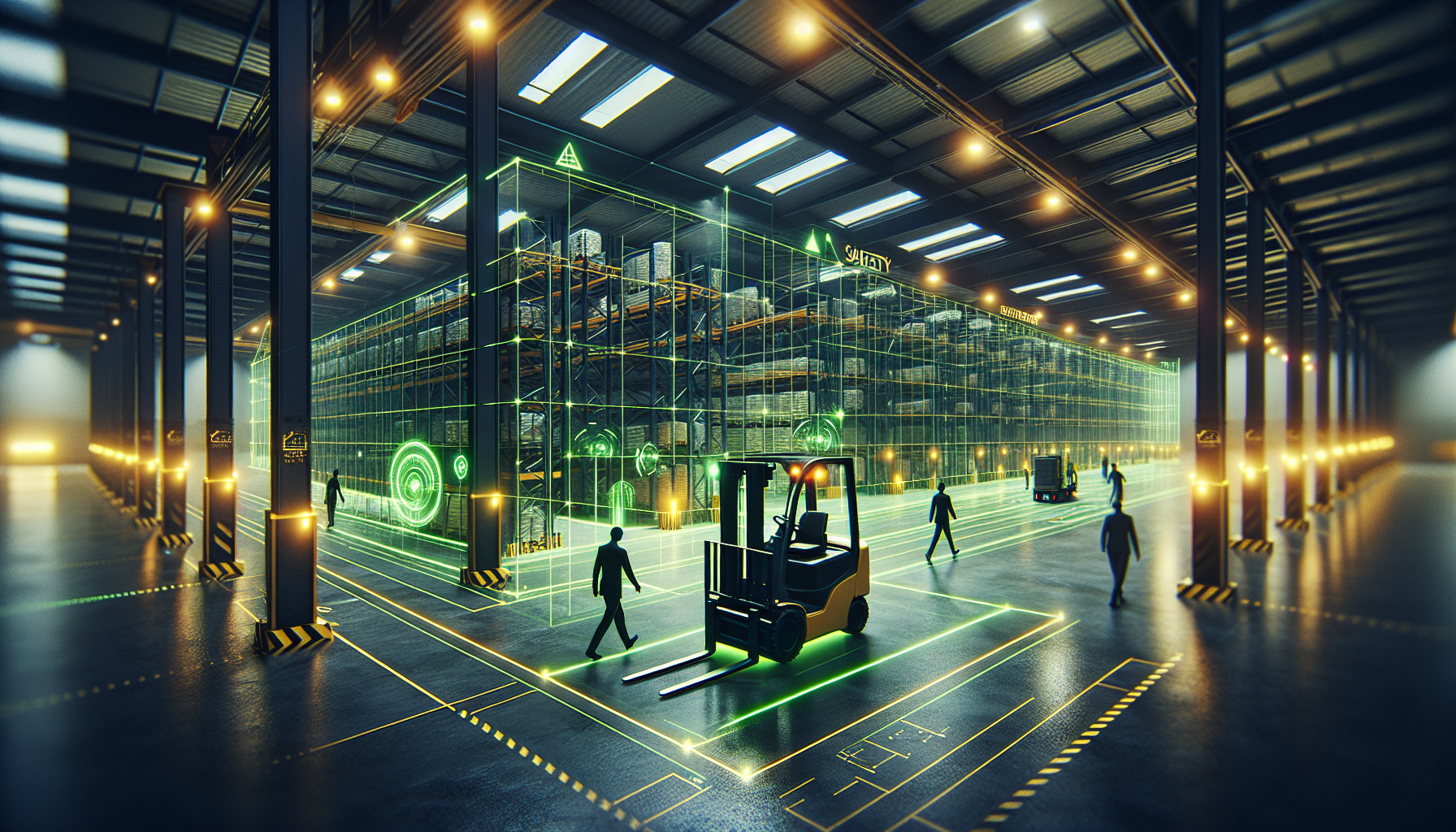
You cannot watch everything, everywhere, all the time.
Warehouses run 24/7. Forklifts never stop. Dock doors cycle hundreds of times per shift. People cross traffic lanes. Equipment ages. Workers tire.
Traditional safety depends on supervisors catching problems and operators self-reporting. This approach has hit its ceiling. You cannot staff enough eyes to watch every interaction.
AI changes the math. Computer vision monitors continuously. Machine learning detects risks in real-time. Intervention happens before incidents.
What is Logistics Safety AI?
AI systems built for safety monitoring in warehouses, distribution centers, and manufacturing facilities. Four core components:
Computer Vision: Cameras capture operations. AI analyzes footage in real-time—recognizing forklifts, pedestrians, pallets, dock doors. Detects unsafe conditions and behaviors.
Machine Learning: The system learns from data. Identifies patterns that correlate with incidents. Distinguishes normal from abnormal. Improves over time.
Predictive Analytics: Spots leading indicators—conditions and behaviors that historically precede accidents. Acts before incidents, not after.
Automated Alerting: Risk detected, supervisor alerted. Immediate intervention or logged for coaching.
Not surveillance. Augmented human capacity.
How It Works
Forklift Safety
Forklifts are the highest-risk equipment in most warehouses. AI sensors mount directly on the lift, capturing continuous video and telemetry.
Detections include:
- Pedestrian near-misses—even without contact
- Speed violations—aisles, corners, dock areas
- Stop sign compliance—did they actually stop and look?
- Load handling—elevated loads during travel, unstable stacking
- Seatbelt status
Every detection generates video evidence. Supervisors see exactly what happened. Coaching becomes specific.
Dock Door Safety
Loading docks: trailers shift, dock plates fail, forklifts drive off edges, pedestrians enter active zones.
Stationary cameras monitor:
- Trailer restraint—secured before loading?
- Dock plate position—deployed and stable?
- Zone violations—unauthorized entry
- Load quality—improperly secured cargo, overhanging loads
Facility-Wide
Beyond equipment:
- Pedestrian pathways—staying in designated areas?
- Housekeeping—debris, spills, blocked exits
- PPE compliance—required equipment worn?
- Ergonomic risks—repetitive motions, risky lifting patterns
Reactive vs. Predictive
Traditional: incident happens, you investigate, you implement corrective actions, you hope it does not recur.
AI enables predictive safety.
Leading Indicators: Operator takes corners too fast, skips stop signs, drives with elevated loads. No accident yet. But statistically more likely to have one. AI flags it now.
Pattern Recognition: End of shift. High-volume periods. Specific zones. Weather affecting visibility. AI flags when risk factors stack.
Trend Analysis: Safety improving or declining? Which shifts, operators, areas trending wrong? AI surfaces patterns automatically—not in quarterly reviews.
Intervene before someone gets hurt.
Results
Incident Reduction: 70-93% drops in recordable incidents. Common.
Coaching Quality: Video evidence transforms coaching. Not general reminders—specific examples from specific operators.
Fair Accountability: Video protects operators too. Shows what actually happened vs. what witnesses remember.
Insurance: Many insurers offer premium reductions. Data supports regulatory compliance.
Operational Gains: Safety monitoring reveals traffic flow problems, equipment utilization patterns, process bottlenecks. Same data improves productivity.
Implementation
Operator Acceptance
Common concern: will workers feel surveilled?
Position it as coaching, not surveillance:
- No facial recognition. Badge or QR sign-in. Tracks equipment, not faces.
- Focus on improvement, not punishment.
- Full transparency. Operators see their own data.
- Video protects good operators from false accusations.
Union environments: initial skepticism gives way to appreciation for fairness and consistency.
Integration
Connect to existing systems:
- WMS—safety data + operational data
- HRIS—operator performance + training records
- Safety management—feed into existing workflows
- BI tools—safety metrics in dashboards
Deployment
Modern systems deploy fast:
- Edge processing—AI runs on sensors. Low bandwidth. Real-time.
- Cellular—no IT infrastructure needed initially
- 30-minute install per forklift
- Centralized management across sites
Go live in days. Actionable insights immediately.
What's Next
Computer vision models keep improving. New sensors capture more data. AI agents now investigate issues autonomously and recommend interventions.
The question is not whether to adopt AI safety software. It is how fast.
OneTrack's AI safety platform has helped logistics operations reduce incidents by 93%. See how it works.
Explore AI Safety Solutions →
Related Articles
- AI Safety Software for Warehouses & Logistics - OneTrack's complete safety platform
- AI Forklift Safety System 101 - Deep dive on forklift-specific AI safety
- Top 10 Leading Indicators of Safety Accidents - What AI looks for
- AiOn: AI Agent Platform for Logistics - Autonomous safety coaching and investigation agents